
Mark Weiser Best Paper Award
Wandatch: Infrastructure-Free Point-to-Command with Smartwatches and Speakers
PerCom, 2026
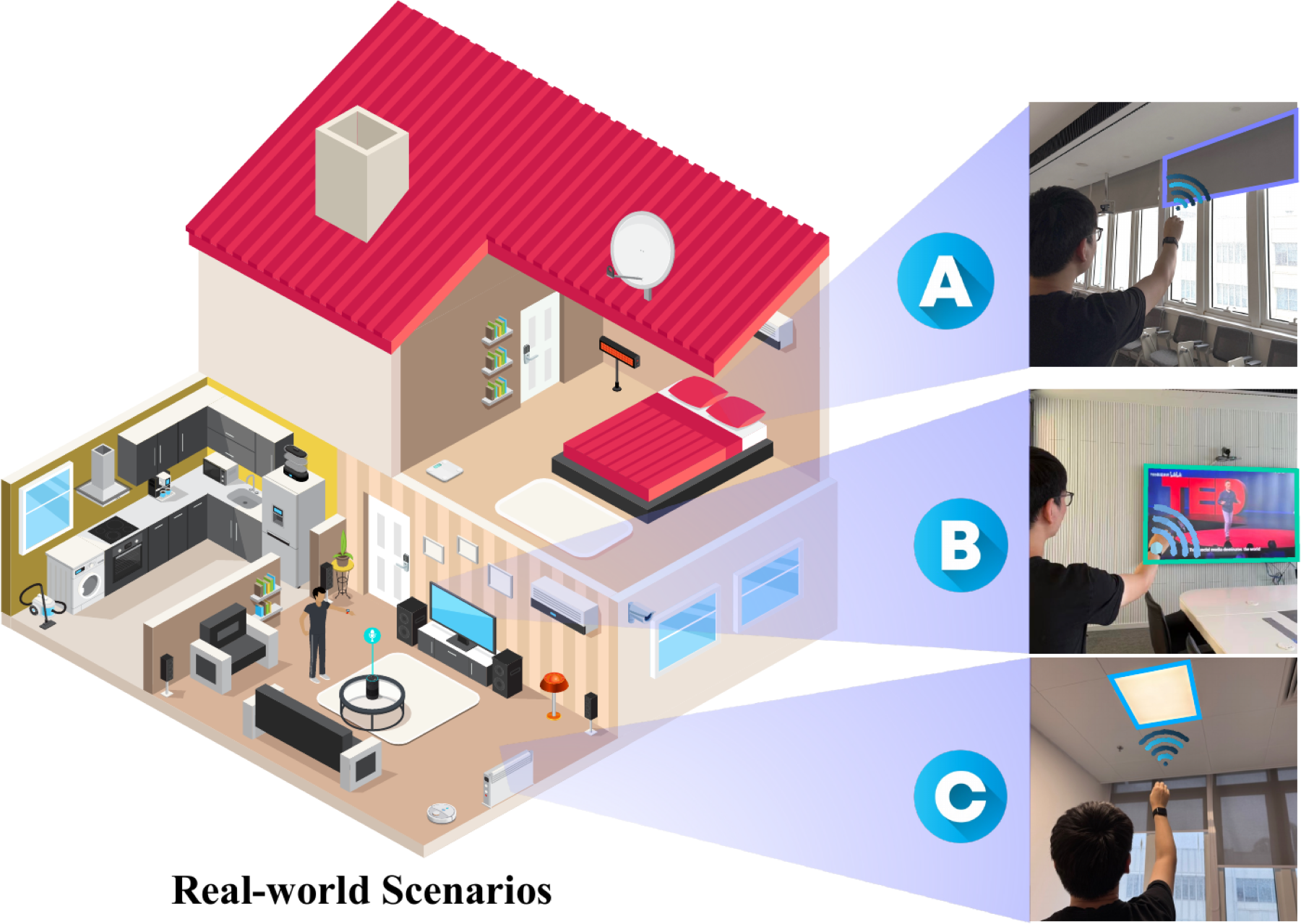
A visual tour of how Wandatch enables point-and-command smart-home interaction without cameras, tags, anchors, or room-specific calibration.
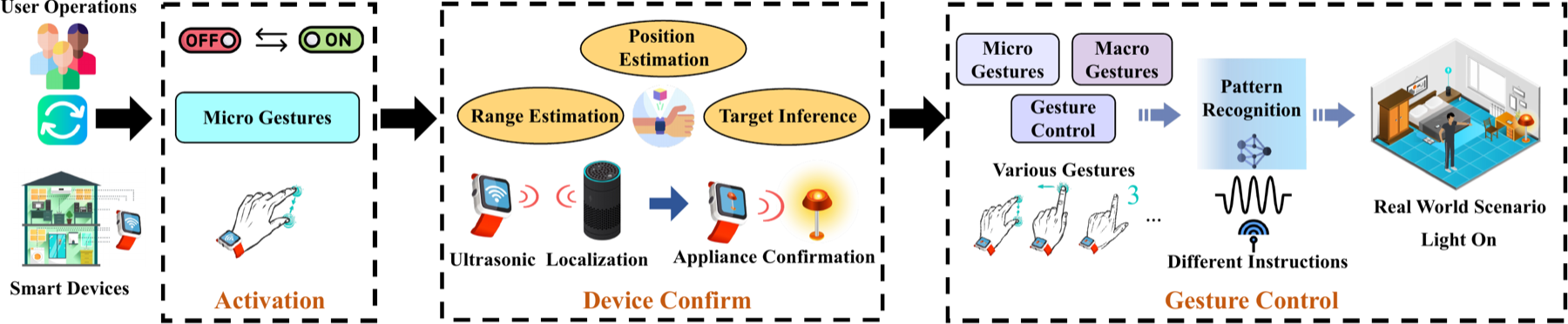
Workflow
From wrist motion to appliance command
The interaction is organized as a three-step loop: activate the watch with a micro gesture, confirm the target through acoustic localization and IMU orientation, then control it with single- or multi-stroke gestures.
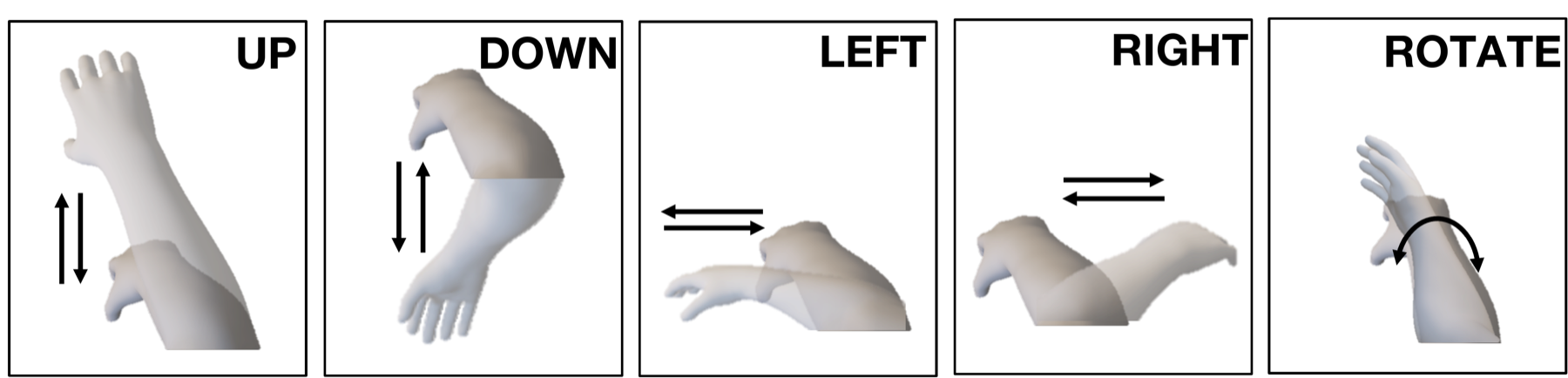
Gesture Layer
Gestures are treated as an interface
The source sketches make the command vocabulary readable immediately: up, down, left, right, and rotate become the atomic controls for appliances.
- Micro gestures wake and select without a rigid gesture-pause routine.
- Single-stroke gestures handle directional commands such as up, down, left, right, and rotate.
- Multi-stroke recognition keeps richer air-writing commands practical.
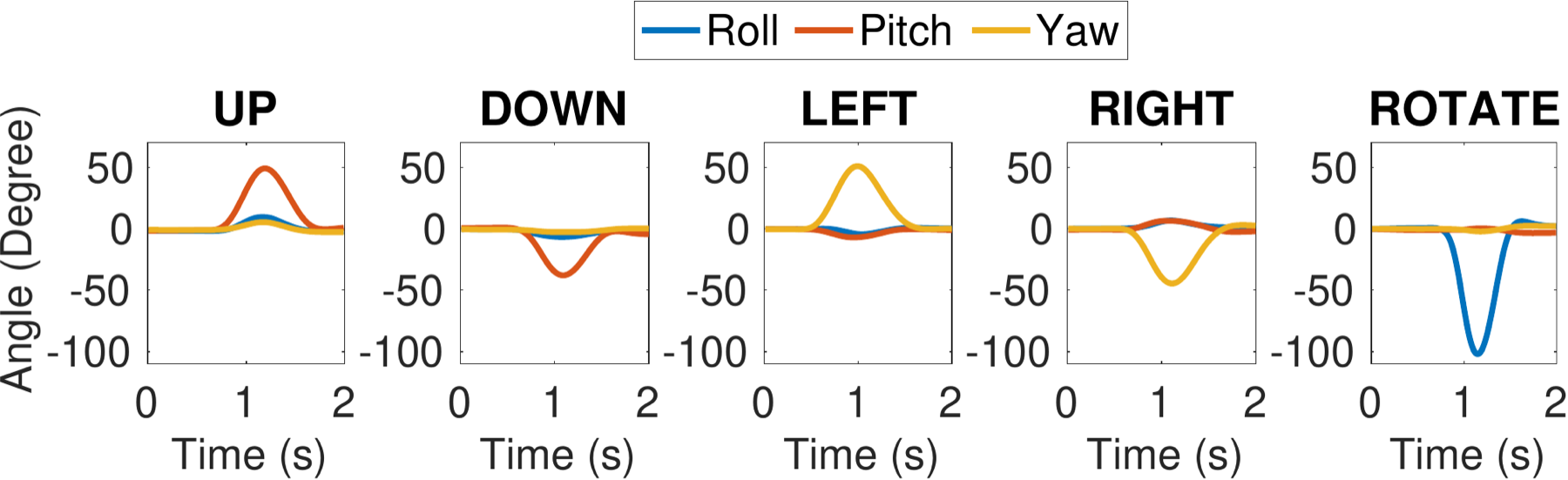
Gesture Signals
Motion traces reveal why the gestures are separable
The gyroscope traces show distinct roll, pitch, and yaw patterns for directional commands, making the recognition logic more inspectable than a paragraph-only explanation.
Deployment
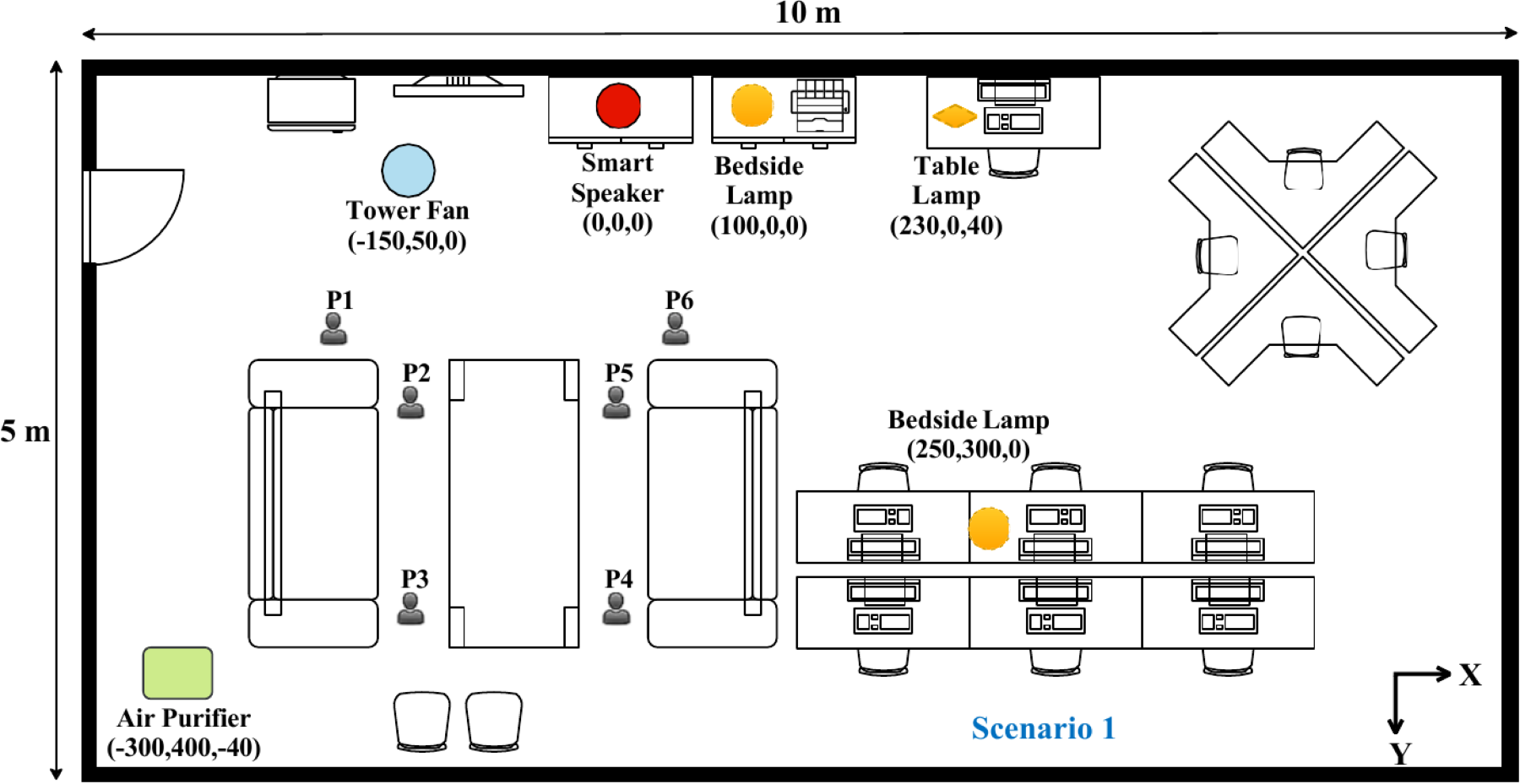
Sparse deployment tests room-scale pointing
The office layout shows where participants stood, where appliances were placed, and why a wrist-ray interface needs reliable spatial discrimination.
Deployment
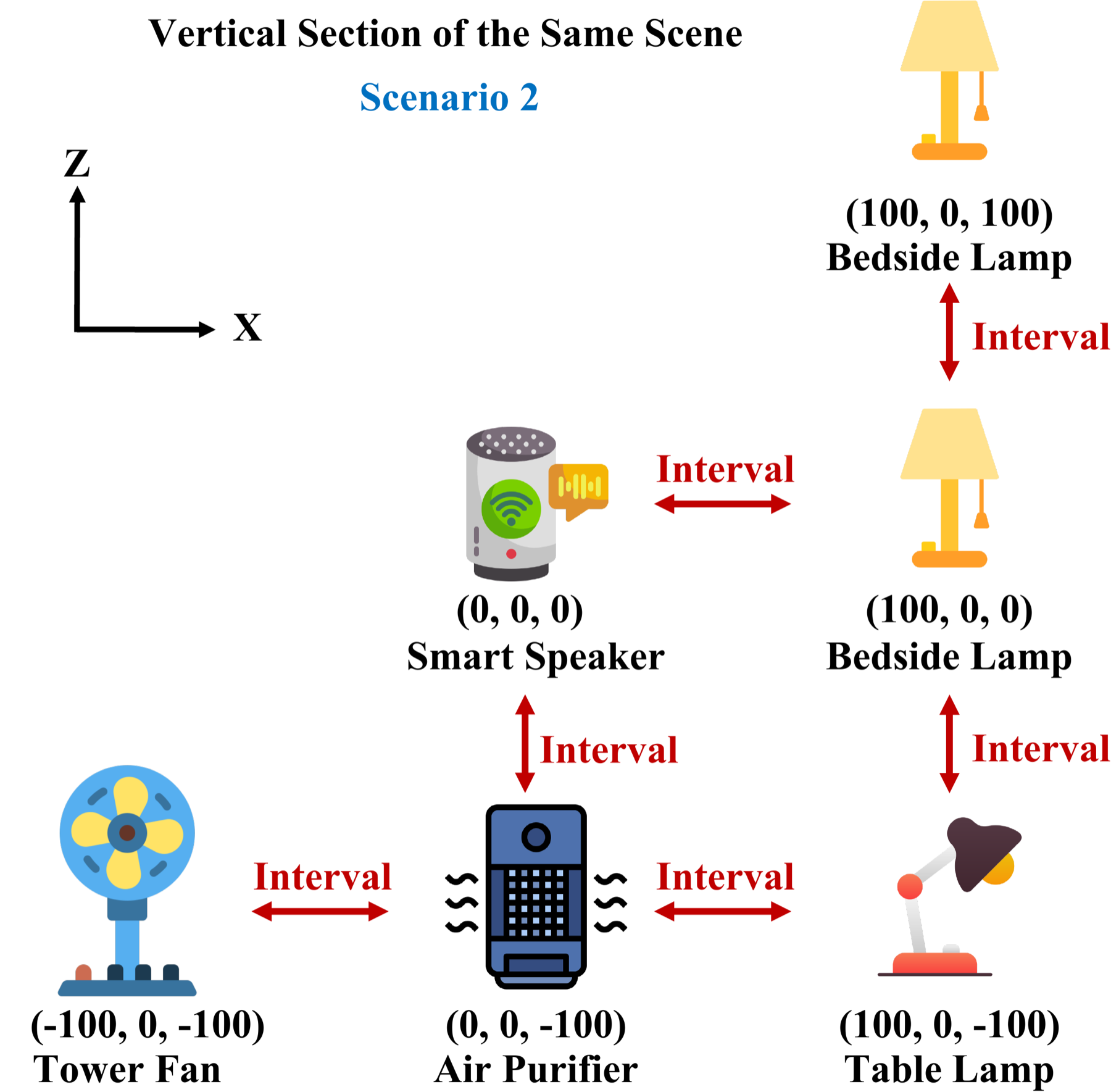
Dense deployment tests close-range ambiguity
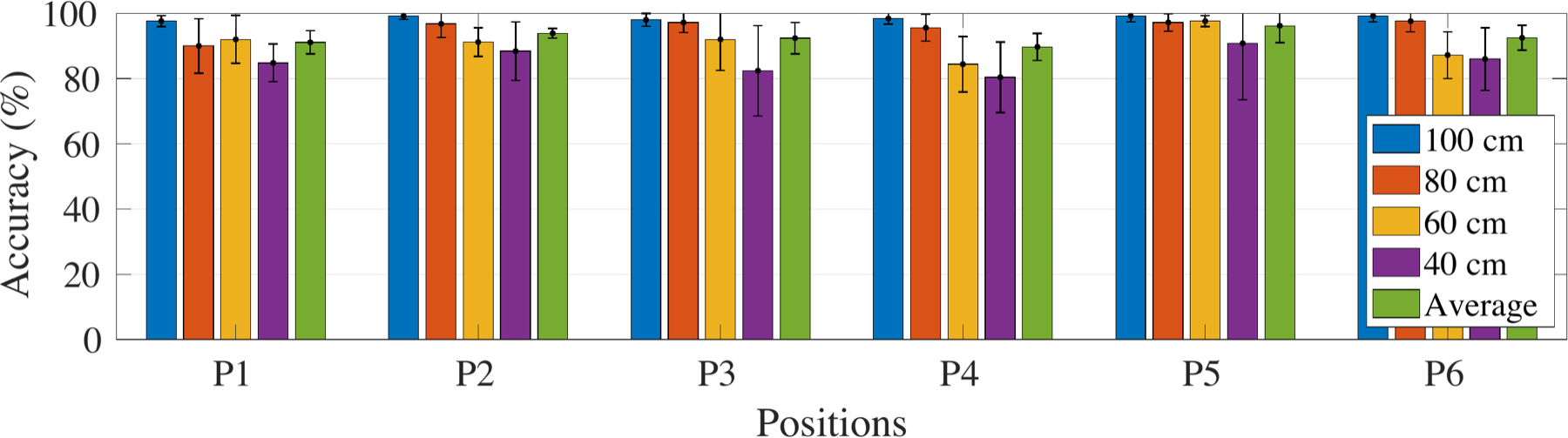
The dense setup stresses selection accuracy when appliances are arranged close together, including spacing down to 40 cm.
Evaluation
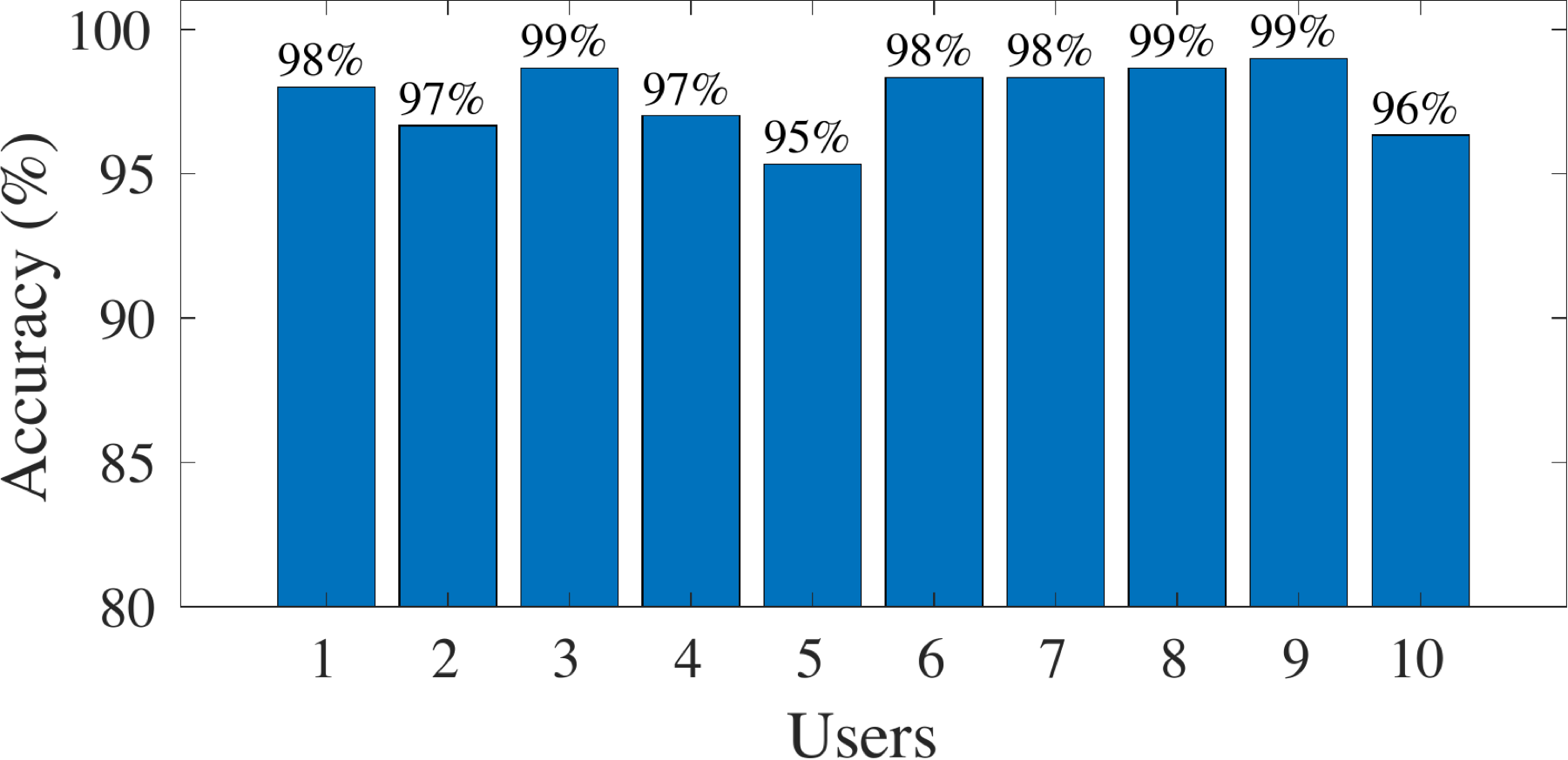
Selection accuracy remains high across users
The per-user accuracy plot makes the core result easy to scan before opening the PDF for full experimental details.
Efficiency
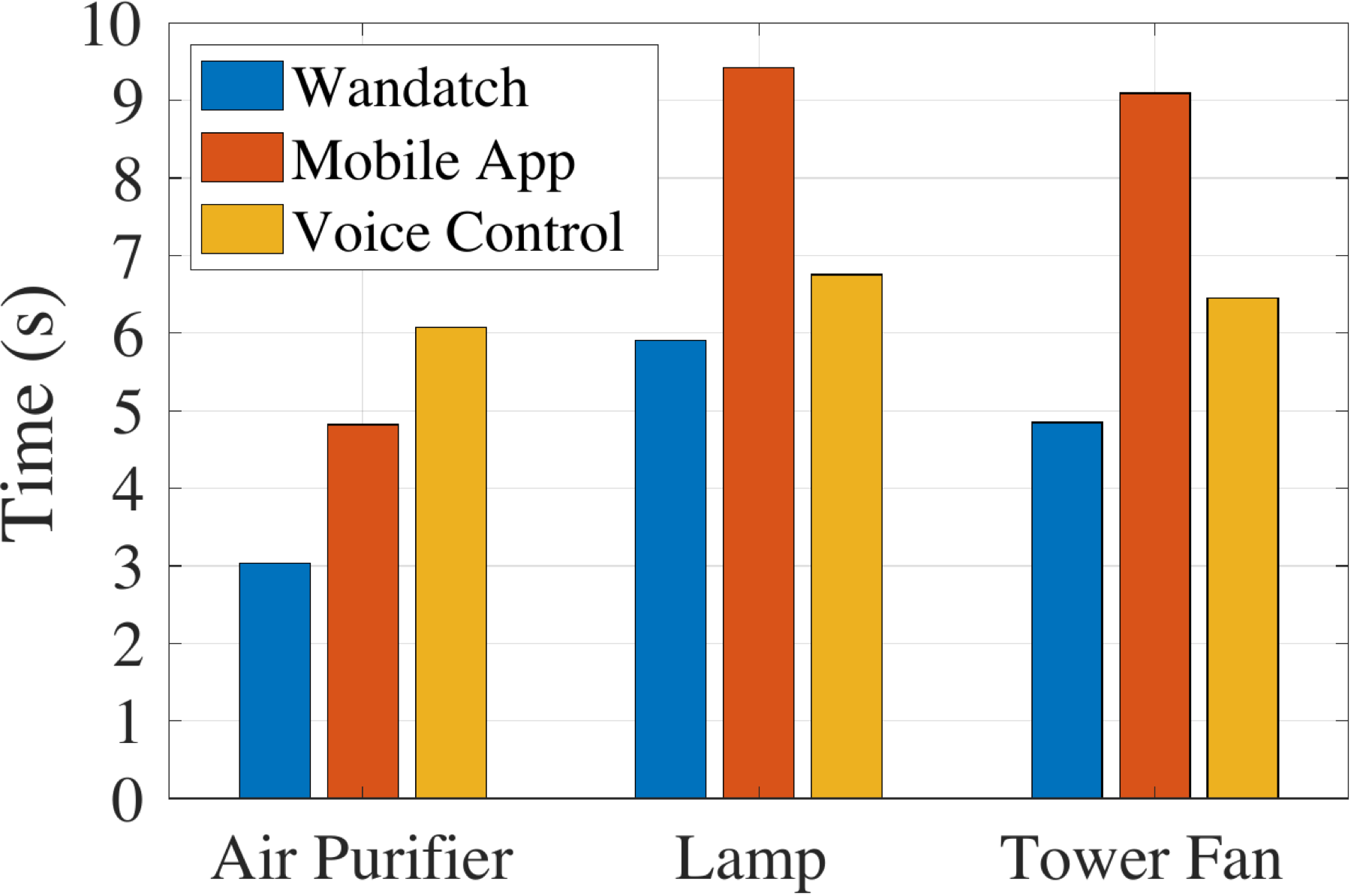
Wandatch reduces interaction time
The time comparison visually explains the 12.6-50.1% improvement over smartphone app and voice-control baselines.
Efficiency
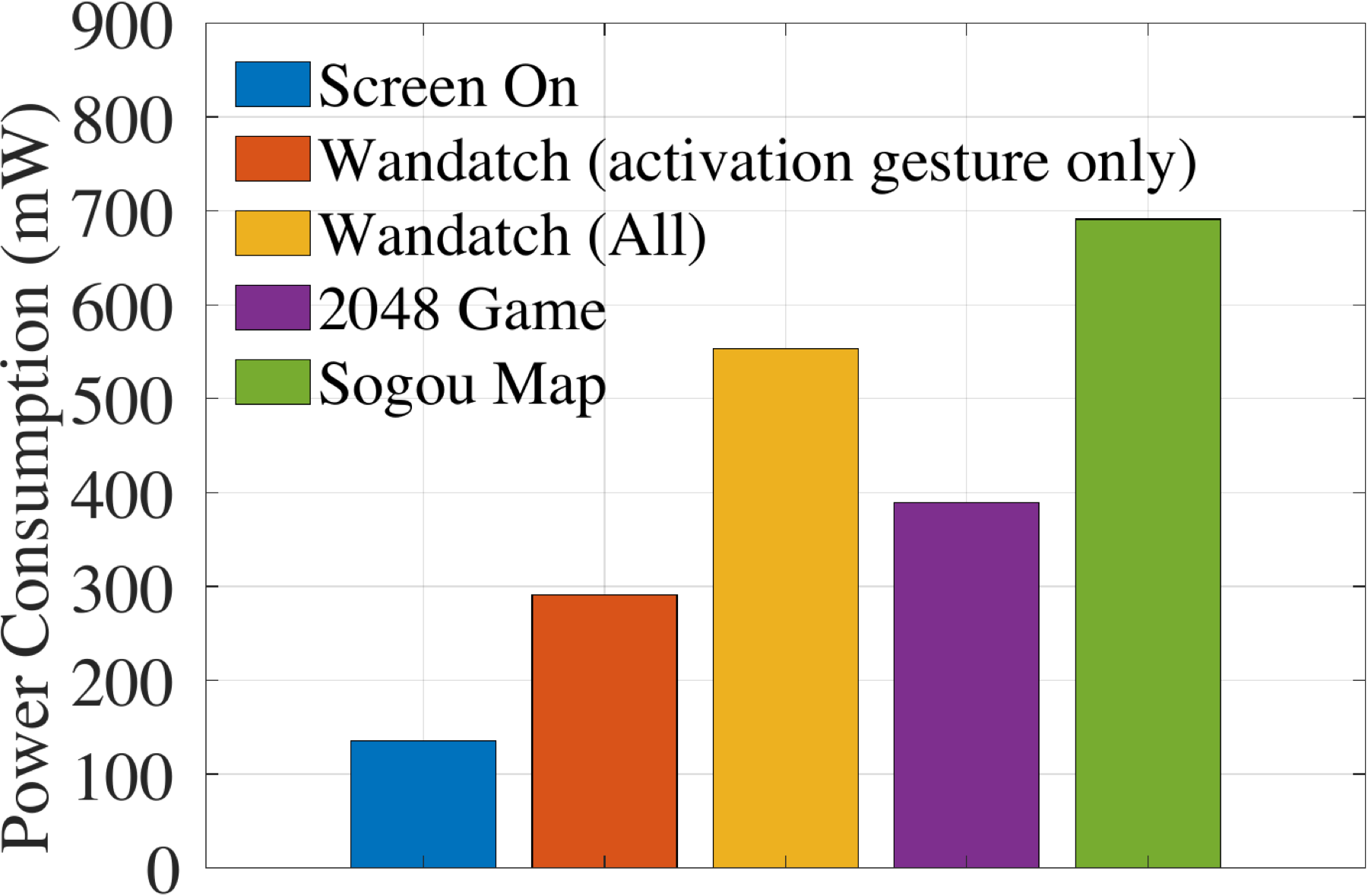
The smartwatch cost is visible too
Power consumption is shown separately so the page does not hide the wearable-side tradeoff behind a single performance number.
Localization
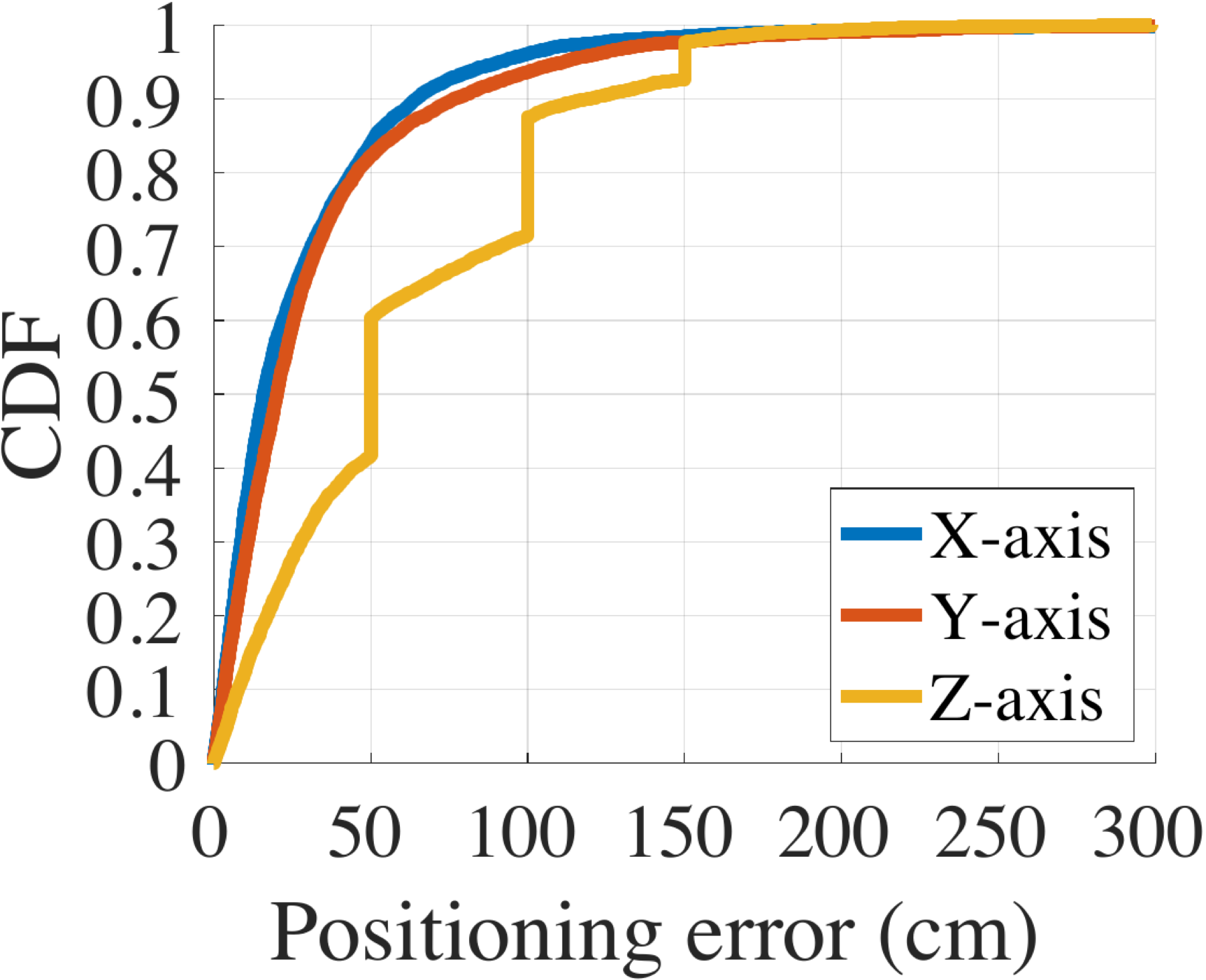
Localization performance is summarized as error CDFs
The positioning CDFs expose how much error comes from each axis, turning the acoustic localization result into an at-a-glance visual.
Localization
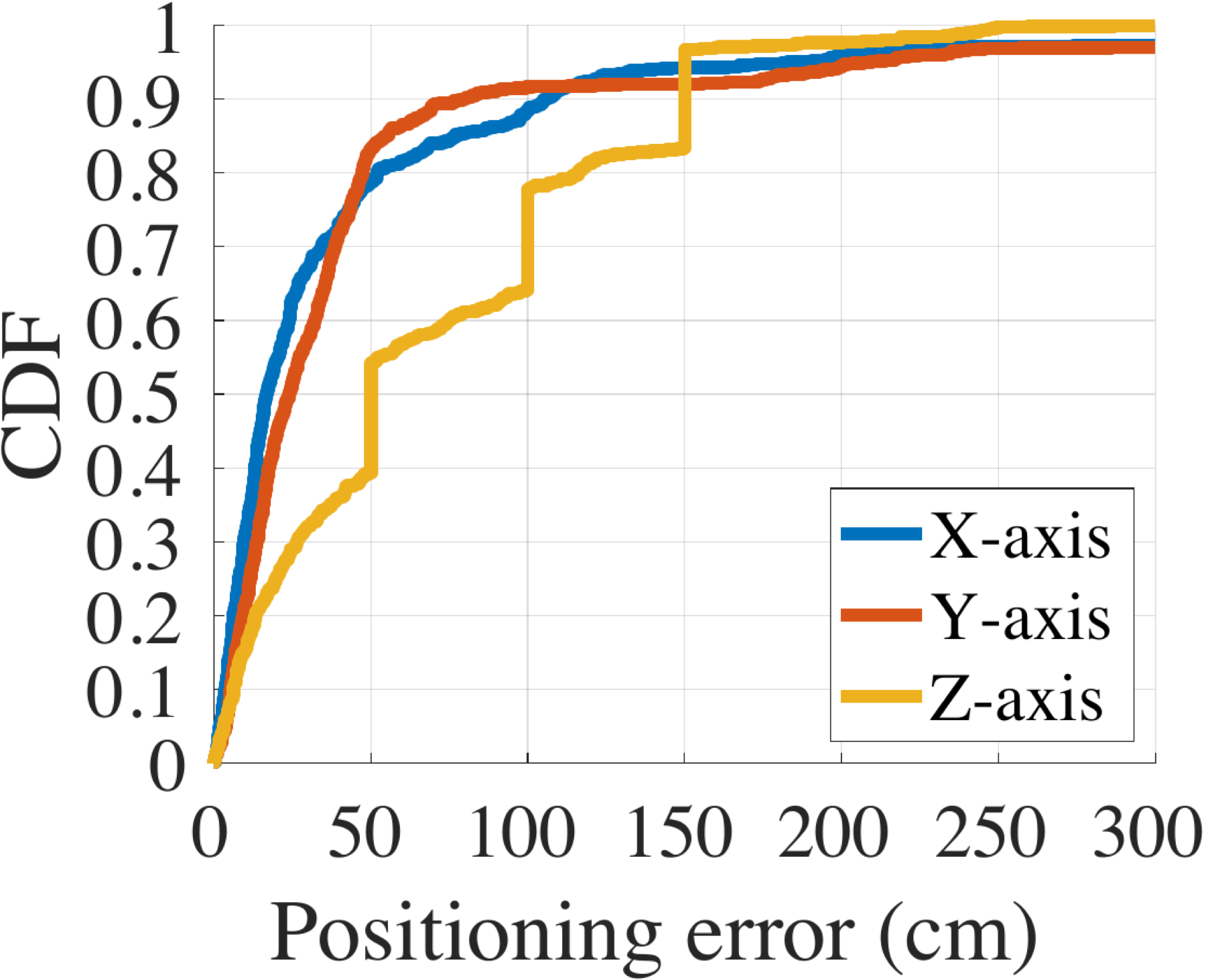
Office-room multipath is shown separately
The second CDF makes the environment shift explicit, helping readers distinguish open-space behavior from a more realistic office setting.
User Study
Participants rated Wandatch higher on most usability dimensions
The questionnaire summary highlights where the interaction felt better than smartphone apps and voice control, especially around speed, controllability, enjoyment, and preference.
Citation
1 | @inproceedings{chen2026wandatch, |