
Med2ECG: Medical-Guided BCG-to-ECG Reconstruction for Diverse Populations
SenSys, 2026
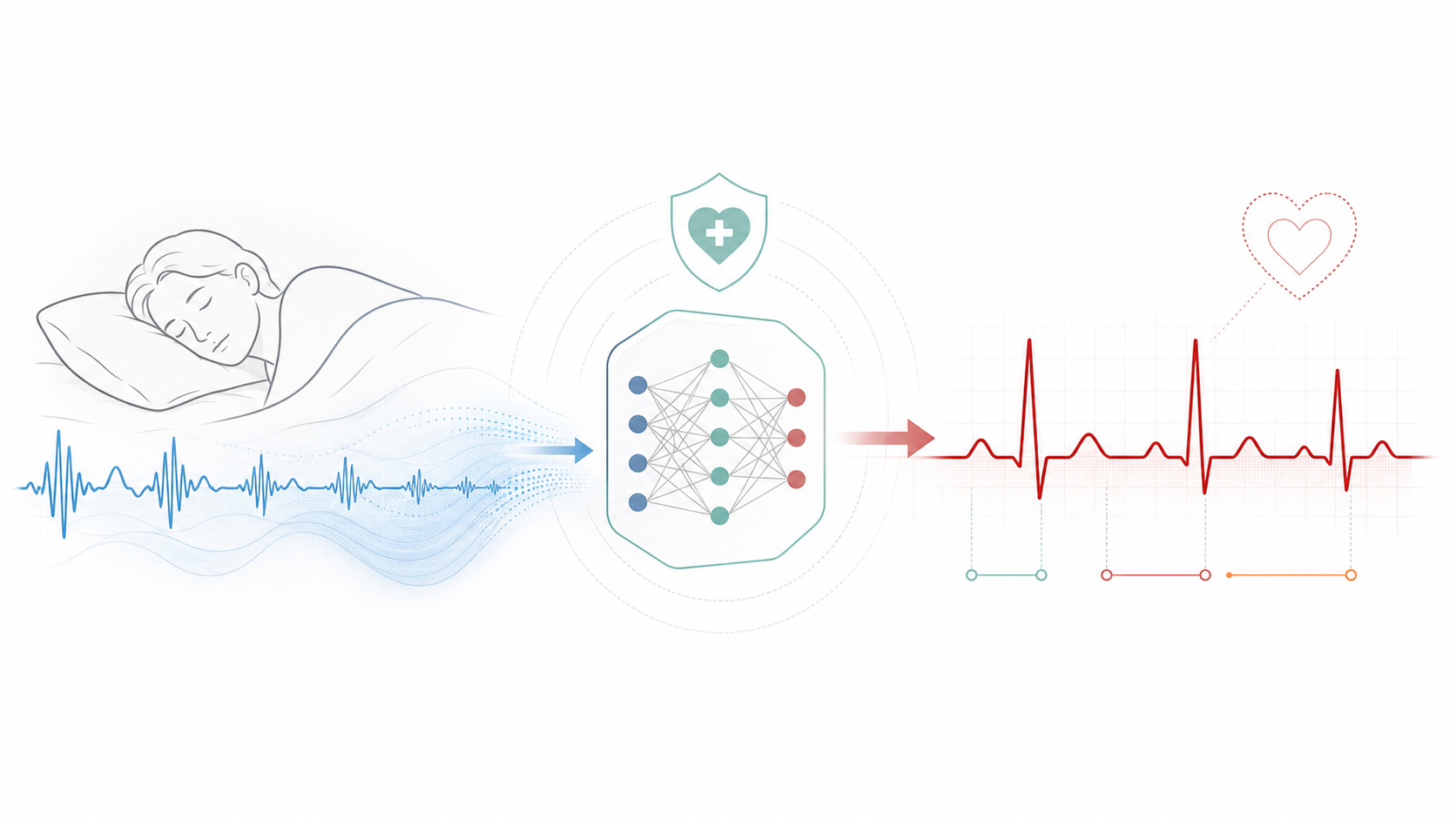
A medical-guided system for reconstructing clinically useful ECG waveforms from passive, contactless BCG signals across healthy and clinical populations.
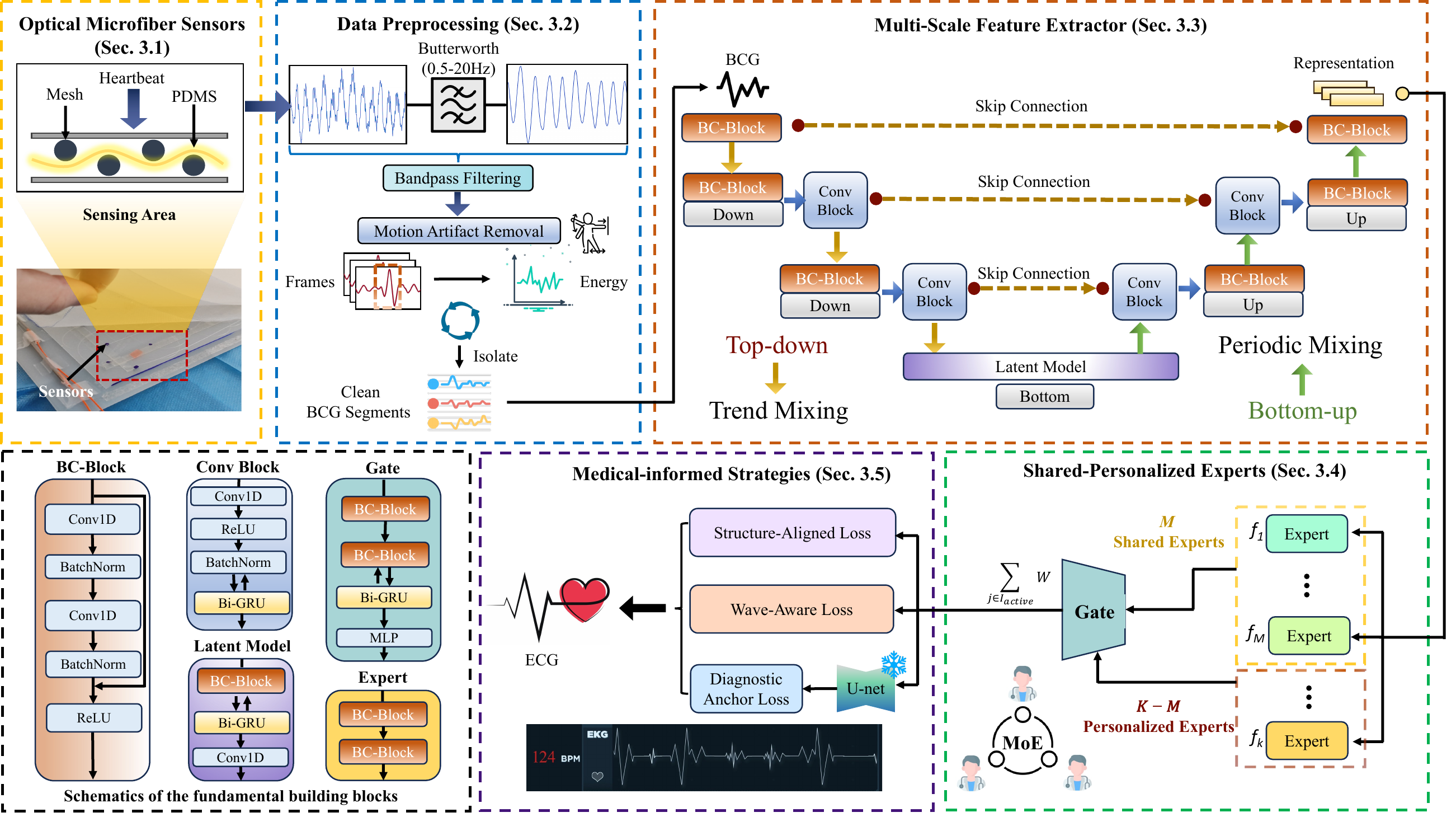
Med2ECG reconstructs ECG waveforms from contactless BCG signals by aligning latent cardiac event structures rather than treating the task as direct waveform regression. Its multi-scale feature extractor, shared-personalized experts, and medical-informed losses preserve morphology and diagnostic intervals across subjects, postures, and clinical settings.
Framework
From contactless BCG to diagnostic ECG
Med2ECG combines a multi-scale feature extractor, shared-personalized experts, and medical-informed objectives so the reconstruction follows latent cardiac event structure rather than only pointwise waveform similarity.
Physiology
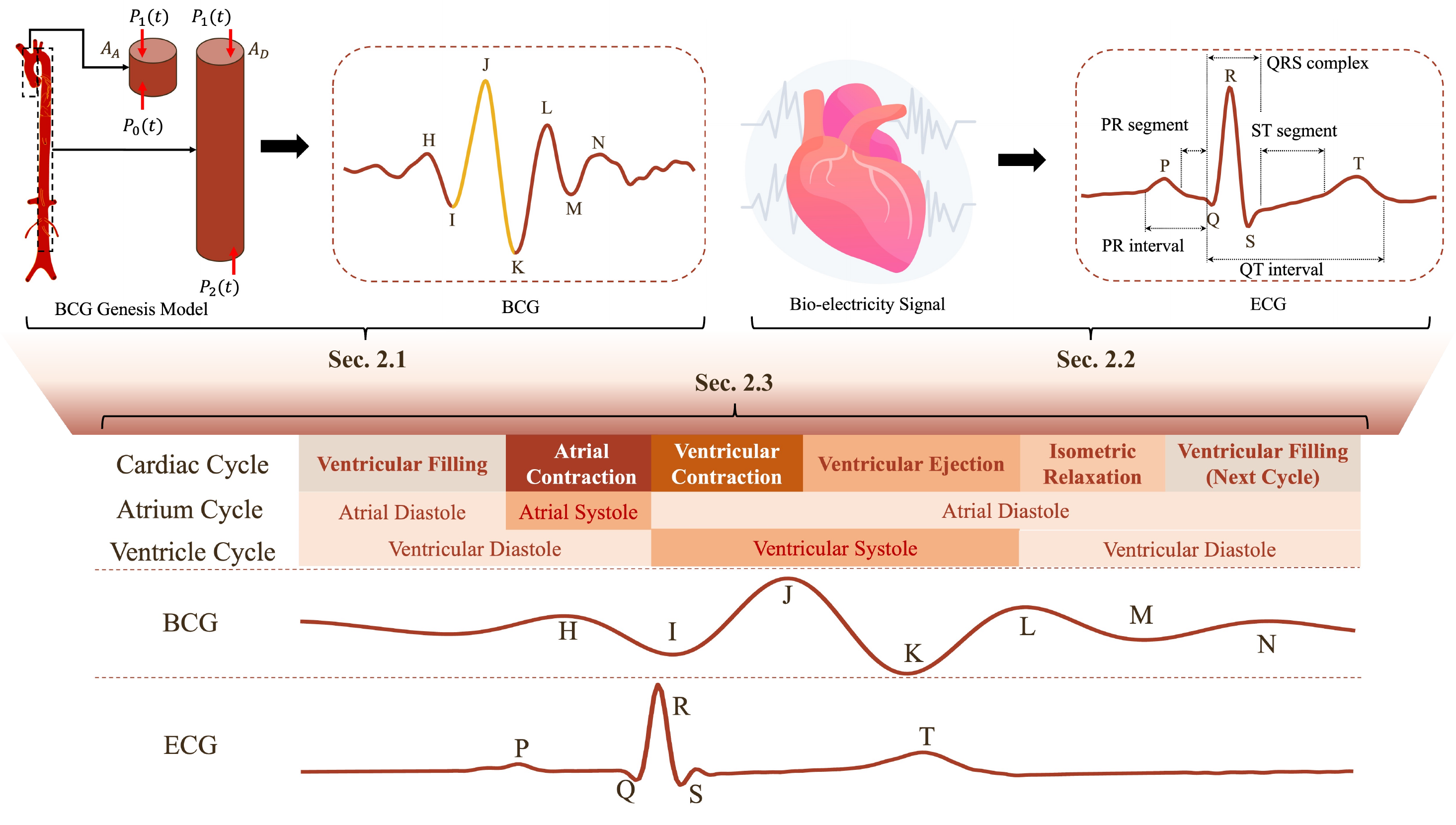
BCG and ECG are aligned through cardiac event structure
The page foregrounds the paper's core reframing: BCG I/J/K events and ECG P/QRS/T waves are treated as related physiological sequences, making cross-modal reconstruction less brittle across people and postures.
Reconstruction
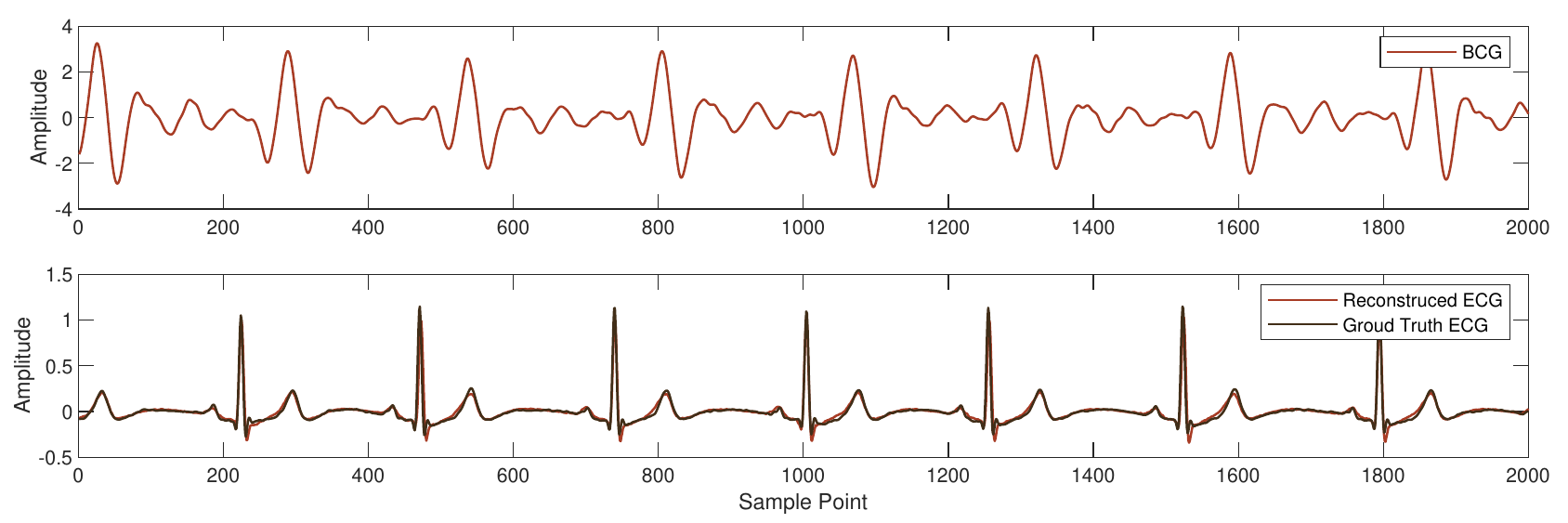
Sample traces show the reconstructed ECG against ground truth
The sample result makes the task concrete: Med2ECG starts from a passive BCG waveform and recovers ECG morphology useful for downstream cardiac interval estimation.
Clinical Dataset
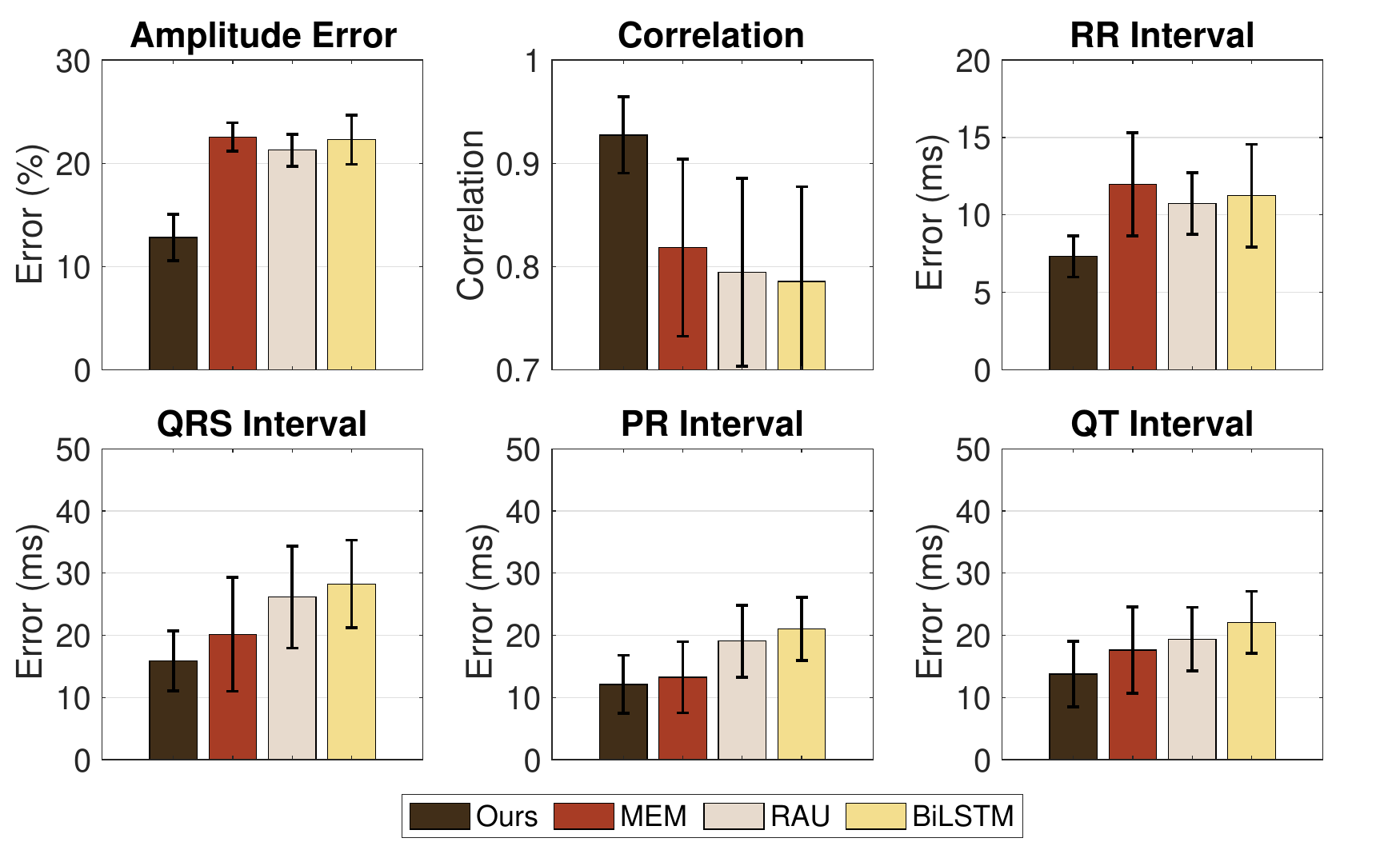
Clinical evaluation covers healthy and patient data
On the self-collected in-hospital dataset, Med2ECG reports 0.927 PCC and 12.82% amplitude error while preserving clinically relevant timing metrics.
Public Dataset
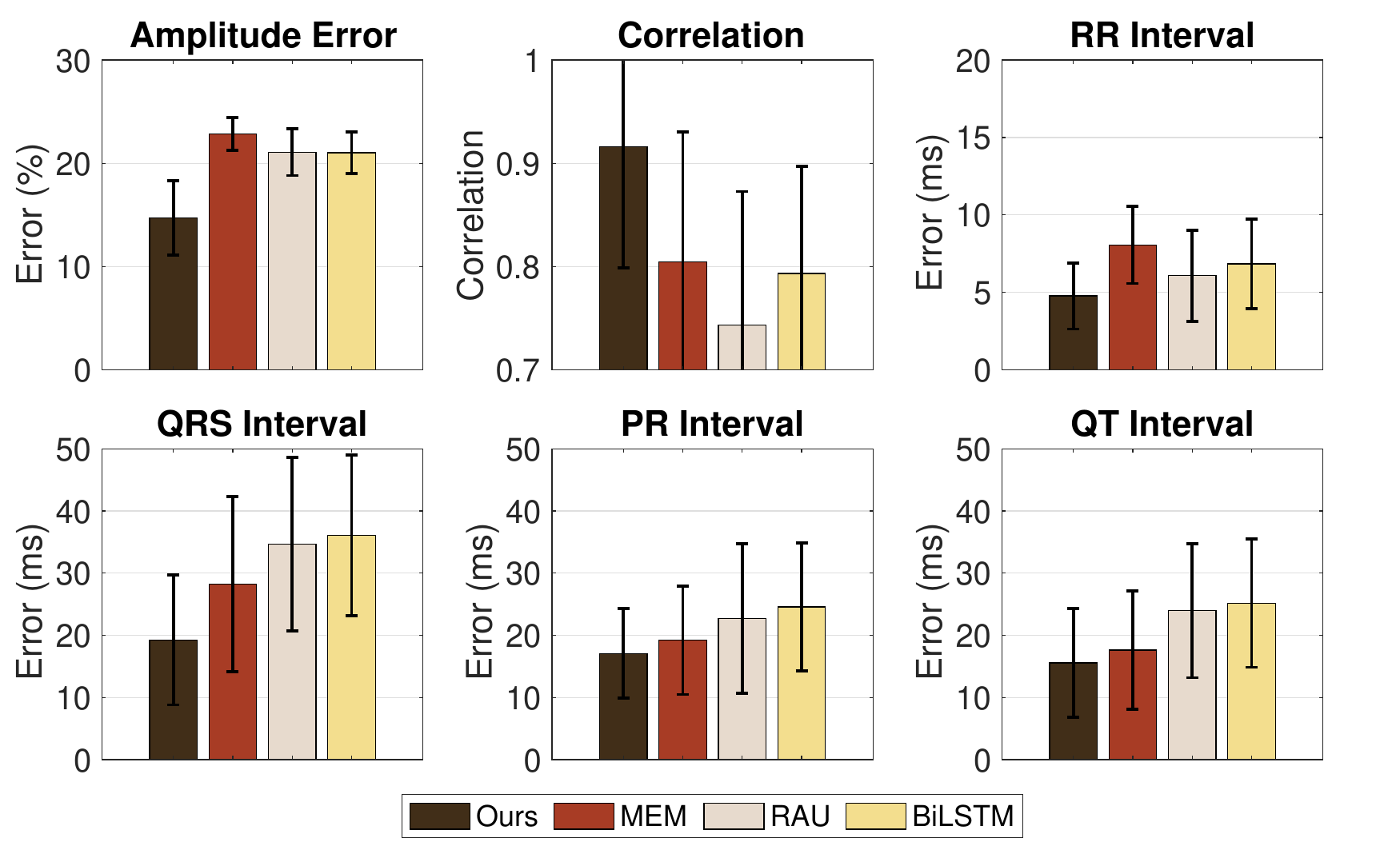
Public data validates generalization
The public-dataset results summarize morphology and timing metrics against prior baselines under subject-independent evaluation.
Ablation
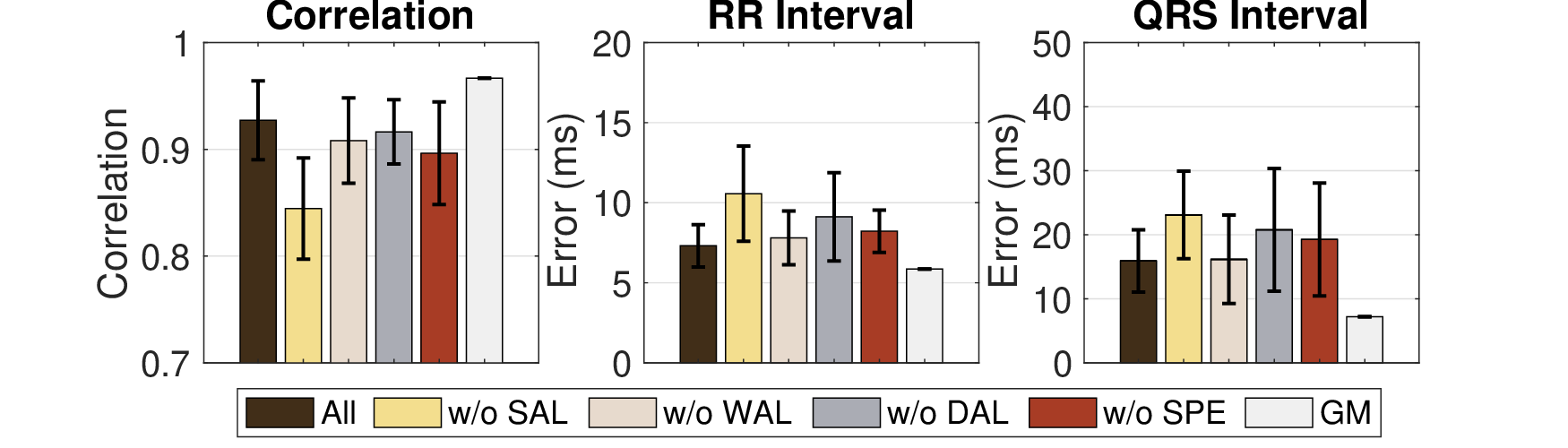
Each design choice is stress-tested
The ablation study isolates the impact of the expert architecture and medical-informed losses on reconstruction quality.
Patient Study
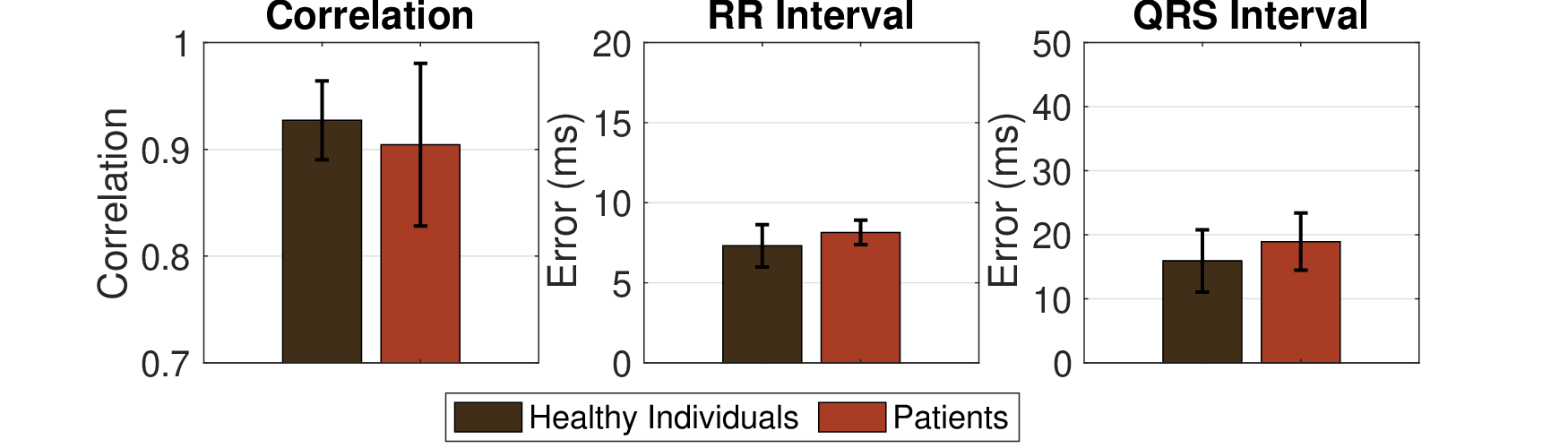
Patient data is separated from healthy-subject results
The patient comparison highlights how Med2ECG behaves across diverse cardiovascular conditions rather than only controlled healthy recordings.
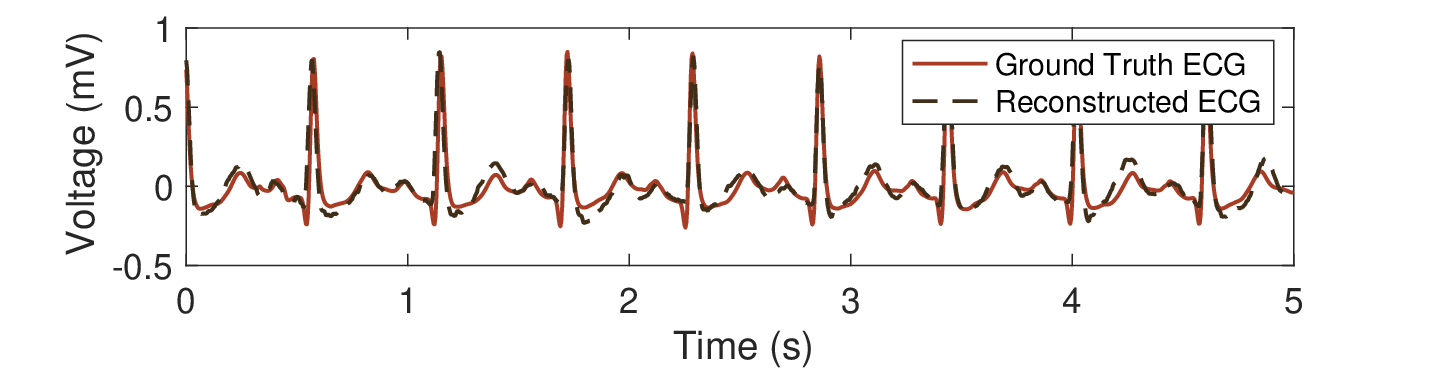
Clinical Example
Clinical rhythm examples remain visible
A tachycardia case is included so readers can quickly inspect how reconstructed ECG traces look on patient data before opening the full paper.
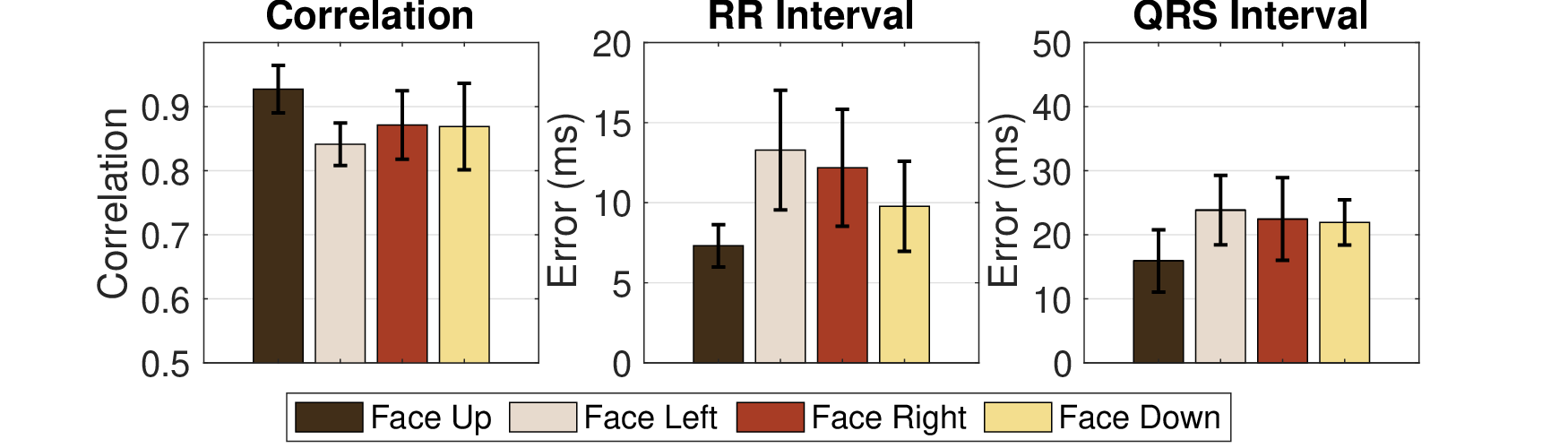
Robustness
Sleeping posture is evaluated explicitly
The posture analysis reflects the practical deployment target: passive overnight sensing where users naturally shift position.
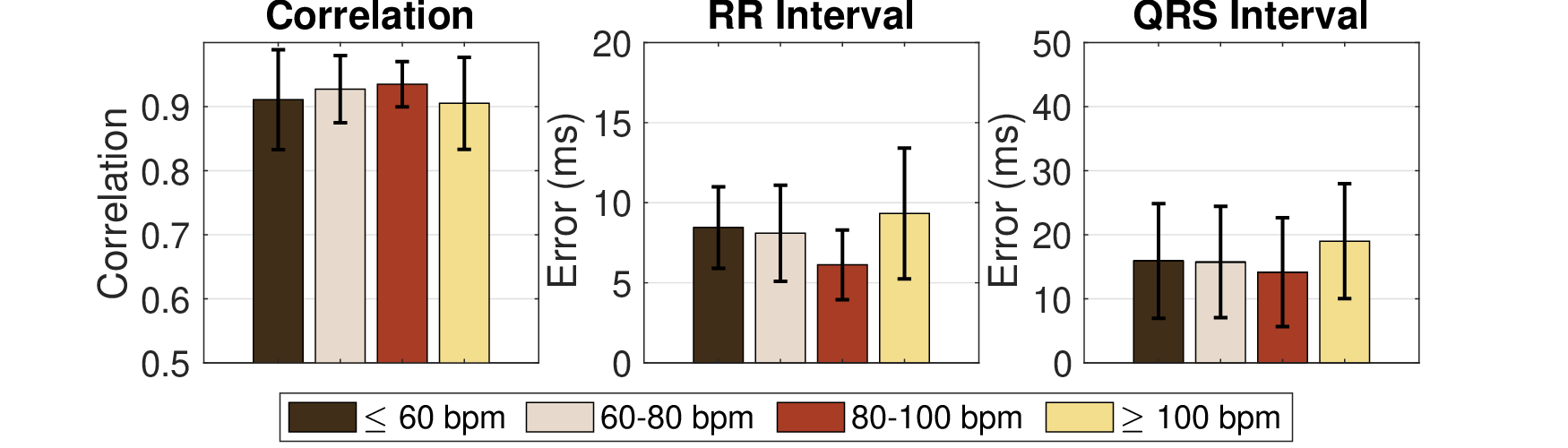
Robustness
Heart-rate variation is part of the stress test
Performance is broken down across heart-rate ranges to show where reconstruction remains stable as cardiac dynamics change.
Citation
1 | @inproceedings{chen2026med2ecg, |